 Teshome GirmaSales & Marketing Manager, Temer Properties
Developers Don't Buy Today's City. They Buy Tomorrow's.
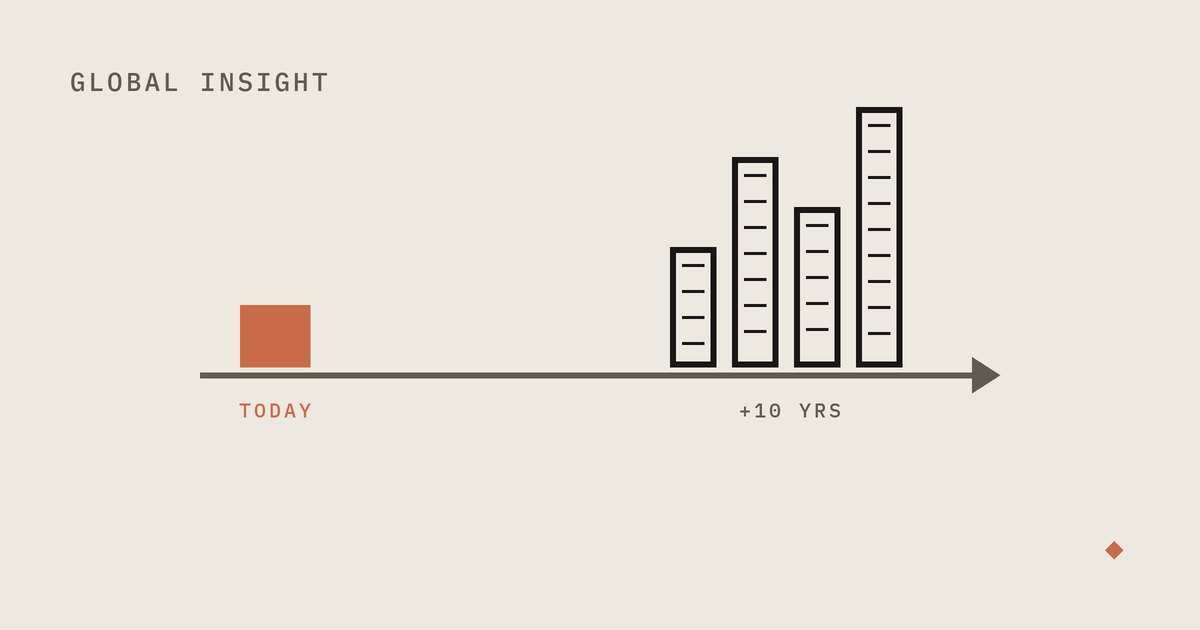
One of the quiet reasons real estate developers make money: they look at a piece of land and see what will surround it in ten years — not what surrounds it now.
Today I want to give away a secret. Not a trick — a habit. One of the things that separates a profitable real estate developer from an unlucky one has almost nothing to do with construction, and everything to do with when and where they decide to build.
The price of a home is not only the cost of building it
In a big city like Addis Ababa, what pushes a home's price up is not just cement, steel and labour. Sometimes the thing that raises the price is not the house at all. It is the ground the house stands on — and, more precisely, what the city is about to do around that ground.
Two apartments can be built to the same standard by the same contractor at the same cost. Five years later, one of them is worth far more than the other. The difference was never in the building. The difference was in what arrived next door.
What a developer actually looks at
When an experienced developer thinks about starting a project, they do not only look at the city as it is today. They ask a different set of questions:
- What will this place look like in five or ten years?
- Are new infrastructure projects — a corridor development, a ring road, a major junction — planned to pass here?
- Is a business centre, an office district, or an asphalt road going to be built nearby?
- Where is the city's growth plan pointing — and is this plot in its path?
Then they do the thing most people are not patient enough to do. They secure land early in areas that are not yet on anyone's radar — places where the infrastructure is incomplete, the roads are still gravel, and the neighbourhood does not yet look like a neighbourhood.
Then the city catches up
As the infrastructure projects expand and the area becomes desirable, the value of that land rises — sometimes it may double. The developer who bought before the road arrived earns the margin that everyone else pays for after it arrives. That is not luck. It is foresight, and it is one of the real skills behind a developer's success: seeing not only today, but far into tomorrow.
What this means for you as a buyer
You may not be building a tower. But the same habit works at the scale of a single home or a single plot. When you consider buying, do not evaluate the location only by what it is today. Ask what it could become:
- Which direction is the city's master plan pushing growth?
- What road, corridor or transport project is under construction or approved nearby?
- What is being built on the neighbouring plots right now — and by whom?
- Are schools, clinics, markets and offices moving toward this area or away from it?
One honest caution, because I would rather you hear it from me: not every promised project arrives on schedule, and some never arrive at all. Buy on what you can verify — approved plans, work that has physically started, roads you can see being laid — not on rumours of what "will come". Looking far ahead is wisdom. Paying today for a tomorrow nobody can confirm is not.
If you want to go deeper on this, I have written about what actually moves land value in Addis and about why, when you buy a home, you also buy the neighbourhood.
So, the question
When you last looked at a property, were you looking at the house — or at what the area will be in ten years? The developers are looking at the second one. It might be worth looking there too.
Have a question this raised? The first conversation is free — thirty minutes, in your language.
Book a consultation